
When you follow true crime long enough, you start to realize a frustrating reality: the first headline is almost never the whole story. When someone vanishes or is found dead under mysterious circumstances, the initial narrative—shaped by rushed investigations, baffling institutional rulings, or media speculation—can freeze a case in time. For decades, grieving families are left fighting not just for justice, but against an official public record that simply isn’t true.
Look at the recent breakthroughs in two completely different cold cases: the 1996 death of Danielle Houchins in Montana, and the 2000 disappearance of Angel Fehr right here in our own backyard in British Columbia. Both cases show the often disturbing contrast between what authorities originally told the public and the reality that was eventually uncovered.
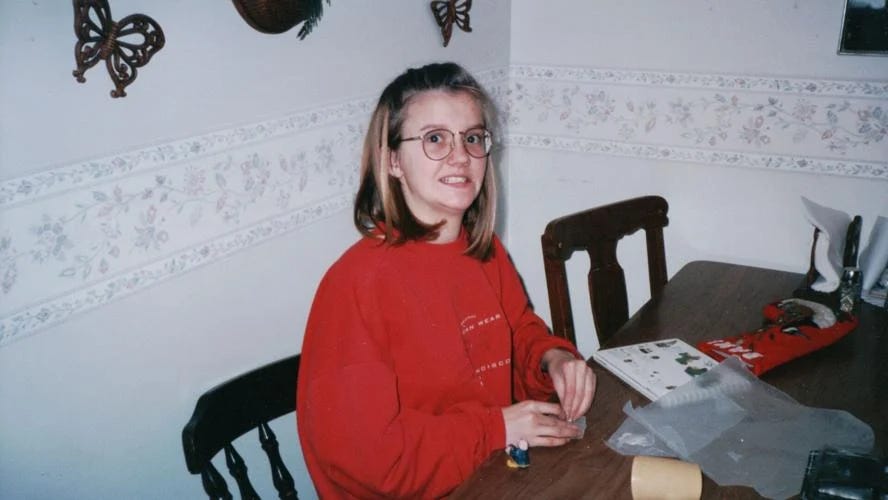
Let’s start with Danielle. In September 1996, the 15-year-old was found dead at a fishing access site on the Gallatin River in Belgrade, Montana. What followed was an institutional failure. Despite clear, physical evidence at the scene indicating she had been brutally assaulted and murdered, the sheriff, coroner, and medical examiner officially ruled her cause of death as “unknown.” Why?
To make matters infinitely worse, the Montana State Crime Lab actually misfiled critical evidence, including the watch she was wearing when she was found. It’s still missing today. For 28 years, her family was haunted by a death categorized as a tragic mystery rather than what it was: a homicide.
The truth didn’t come out until the Gallatin County Sheriff’s Office reopened the case in 2019. Using modern genetic genealogy, investigators sent four hairs found on Danielle’s body to specialized labs.
By July 2024, they had a name: Paul Hutchinson. He wasn’t some known drifter; he was a 55-year-old fisheries biologist with a master’s degree, a family, and a 22-year career at the Bureau of Land Management. He had no criminal record and no known connection to Danielle. When investigators finally confronted him, he physically unraveled, sweating profusely and chewing on his own hand. The very next day, Hutchinson died by suicide—escaping a trial, but confirming to the world exactly what kind of violent predator had been hiding in plain sight.

Then there is the case of Angel Fehr. On Easter weekend in April 2000, the 27-year-old—who was five months pregnant—attended a family dinner in Abbotsford before leaving to drive home to Kamloops with her boyfriend, Trent Larsen.
For 19 long years, the media framed this as a baffling missing persons case. The story was that this expectant mother simply vanished without a trace, leaving her bank accounts untouched. Because Larsen provided plausible excuses to her family, a formal missing persons report wasn’t even filed for two months, a disgusting but common delay in domestic cases.
When the RCMP finally broke the case wide open in 2019, the media celebrated the news that Larsen was being charged with second-degree murder. The public expected a dramatic murder trial for the intentional killing of his pregnant girlfriend. But the legal and forensic reality was much uglier.
The truth was that Larsen had killed Fehr, stuffed her remains into a barrel, and buried it on a stranger’s rural property near 100 Mile House, using the isolated land as a permanent shield.
Investigators only found out after the RCMP’s Special Projects Unit took over and employed a “Mr. Big” undercover sting operation to trick Larsen into confessing to officers posing as a criminal syndicate.
And regarding that celebrated murder charge?
IT DIDN’T STICK.
After 19 years, the Crown knew it would be incredibly difficult to prove beyond a reasonable doubt that Larsen had the specific intent to kill. To guarantee a conviction and prison time, they accepted a pragmatic, if painful, plea deal. In 2021, Larsen pleaded guilty to the lesser charge of manslaughter and committing an indignity to a dead body, receiving a sentence of just over eight years.
Even now, his rehabilitation is a point of contention. Over the last couple of years, the Parole Board of Canada has kept him on a very short leash during his day parole. They’ve explicitly shortened his extension periods because of his poor attitude, his lack of commitment to reintegration programs, and his frustrating tendency to blame media coverage for his inability to hold down a job.
Both of these cases prove how lousy incomplete early official conclusions can be.
An “unknown” death ruling masked a violent predator for nearly three decades, and a missing persons mystery evolved into headlines of a murder charge that ultimately had to be bargained down to a manslaughter plea. It took the relentless persistence of specialized investigators and massive leaps in forensic science to finally pierce through decades of illusion and expose the definitive truth.