
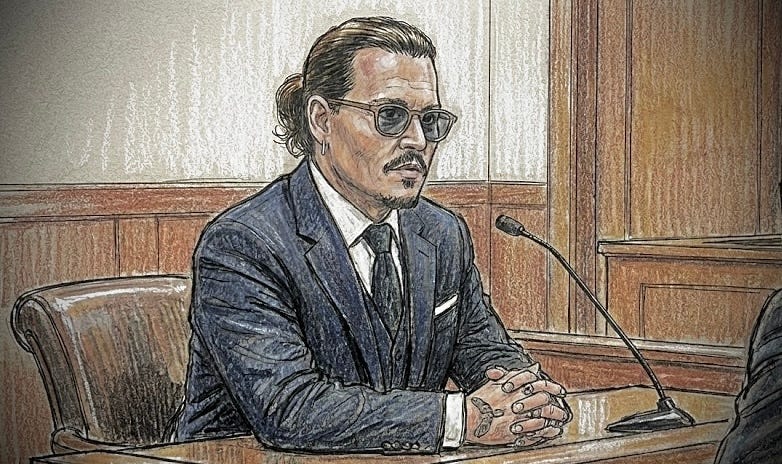
It’s almost impossible to talk about the Johnny Depp and Amber Heard trial without immediately picturing the memes, the TikToks, and the noise of the internet. I watched it happen, just like everyone else.
But when you strip away the hashtag campaigns and the viral courtroom clips, what you’re actually left with is a remarkably bleak story about two deeply broken people—and a culture that decided to mine their trauma for entertainment.
If you look at the actual facts of how things escalated, the timeline is a masterclass in disaster. Depp and Heard met on the set of The Rum Diary in 2009, married in 2015, and by May 2016, the relationship had completely imploded. Heard filed for divorce and took out a temporary restraining order, alleging severe abuse. They settled for $7 million, which Heard pledged to charity, and that really should have been the end of it.
But the legal battles were just beginning. In 2020, Depp sued the UK tabloid The Sun for calling him a “wife beater.” He lost. A High Court judge ruled that 12 of the 14 alleged domestic violence incidents were proven to a civil standard.Despite that massive legal blow, the fight crossed the Atlantic. Depp sued Heard in Virginia for $50 million over a 2018 Washington Post op-ed where she described herself as a public figure representing domestic abuse. She countersued for $100 million. Following a six-week televised trial, the US jury largely sided with Depp, awarding him over $10 million and awarding Heard $2 million for one of her counterclaims. Ultimately, they settled the whole mess late last year, with Heard paying Depp $1 million to finally drop the appeals.
But underneath all that legal jargon and courtroom maneuvering were two real human beings struggling with profound dysfunction. This wasn’t a Hollywood movie with a clear-cut hero and a villain. Both Depp and Heard carried immense, deeply documented childhood trauma that practically guaranteed their relationship would be volatile.
During the trial, Depp testified openly about his mother, Betty Sue Palmer, describing her as unpredictable, cruel, and physically abusive. He recounted how she would throw whatever was nearby—ashtrays, high-heeled shoes, telephones—at him and his siblings. He told the court his childhood home had absolutely “no safety or security,” and that his main goal was just to stay out of the line of fire. He was even tasked with bringing his mother her “nerve pills,” which tragically led him to start taking the medication himself as a young boy just to numb the chaos.
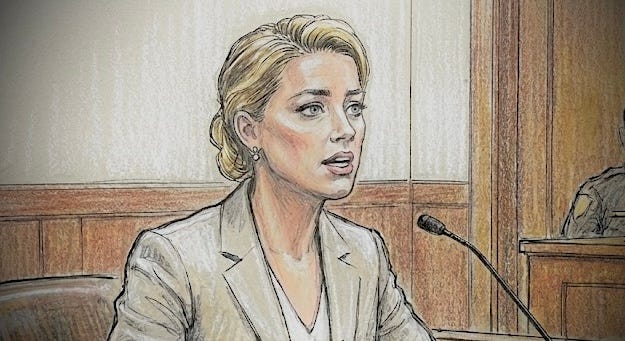
Amber Heard’s background was equally marred by trauma. Trial testimony from a forensic psychologist revealed that Heard was physically abused by her father, David Heard. She grew up watching both of her parents struggle with severe substance abuse, including her father’s alcoholism and drug addiction. The court heard how Heard learned from a very early age to survive in a home mired in chaos, constantly trying to “caretake” and fix her addicted parents. It’s devastatingly clear how she carried that exact same instinct into her relationship with Depp, desperately believing she could “fix” his intense substance abuse issues, too.
When you put those two backgrounds together, the marriage devolved into a nightmare. Their couple’s therapist described the dynamic as “mutual abuse,” painting a picture of a toxic cycle fueled by physical and emotional violence. Depp was wrestling with severe opioid, alcohol, and cocaine addictions, and the agonizing periods of detox heavily strained an already volatile relationship. When you listen to the audio recordings presented in court, the celebrity veneer completely washes away. You just hear two desperate, emotionally dysregulated adults. They beg each other not to leave, they admit to physical altercations, and they expose their deepest fears of abandonment. Neither of them felt safe.
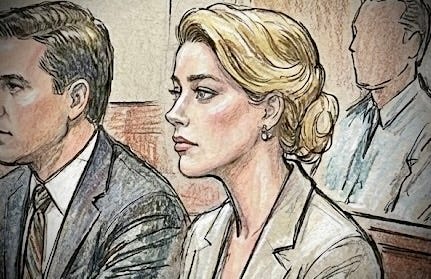
And yet, the public turned this horrific reality into a circus.
The moment the Virginia judge allowed livestreaming cameras into the courtroom, the trial ceased to be a serious legal proceeding and became an unprecedented global entertainment spectacle. The internet weaponized the trial for profit. “Small influencers” quickly figured out that pro-Depp content equaled massive engagement and ad revenue, flooding social media feeds with highly biased coverage, compilation videos, and clickbait.
The social media campaigns were incredibly lopsided. The #JusticeForJohnnyDepp hashtag pulled in billions of views, while Heard was subjected to a horrific, concentrated wave of online abuse and misogynistic nicknames. Worse still, it was fueled by targeted disinformation and bots. I watched false rumors circulate claiming Heard snorted cocaine on the stand, while conservative outlets pumped thousands of dollars into anti-Heard ads to artificially amplify the outrage. Even corporate brands like Milani Cosmetics jumped into the fray just to capitalize on the viral trends. It was trial by TikTok, plain and simple.
The fallout from this spectacle has permanently altered how the public views intimate partner violence. On one hand, the trial did bring unprecedented mainstream attention to the fact that men can be, and are, victims of domestic violence—a reality that is often ignored due to societal stereotypes regarding size and strength.
But on the flip side, it reinforced the incredibly dangerous myth of the “perfect victim.” Because Heard fought back, had mental health struggles, and used substances, the public largely rejected her victimhood. It sent a chilling message: if an abused woman shows anger or resistance, she loses her right to the public’s compassion. Many advocates view the media frenzy surrounding this trial as a massive cultural setback and a direct backlash to the #MeToo movement. The world watched a textbook example of DARVO—Deny, Attack, and Reverse Victim and Offender—play out on a massive scale, proving just how easily public opinion can be manipulated to recast an accuser as the ultimate villain.
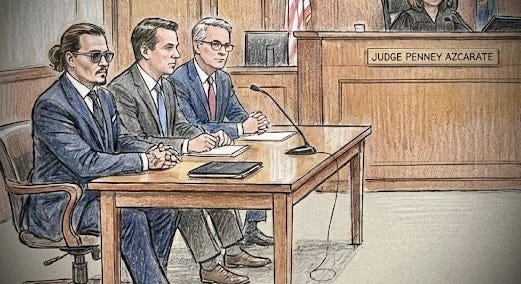
Ultimately, people forgot that these were real human beings with real problems. The world treated their destruction like it was just a reality show, and the damage that mindset has done to future survivors speaking out is something society is going to be dealing with for a very long time.