
When a brutal crime makes the evening news, the public is usually handed a very clean, neatly packaged narrative. The district attorney puts out a press release, the media repeats it verbatim, and the story becomes undisputed fact in the court of public opinion.
But before we dive into the 1983 murder of Katherine Mordick, let’s be perfectly clear about our objective here. We aren’t contesting the guilt or innocence of a man. What we are doing is laying out the simple facts. Because when you actually sit down and read the autopsy reports, the original police files, and the trial transcripts, you start to see how easily the truth can be buried to secure a conviction and a sensational headline.
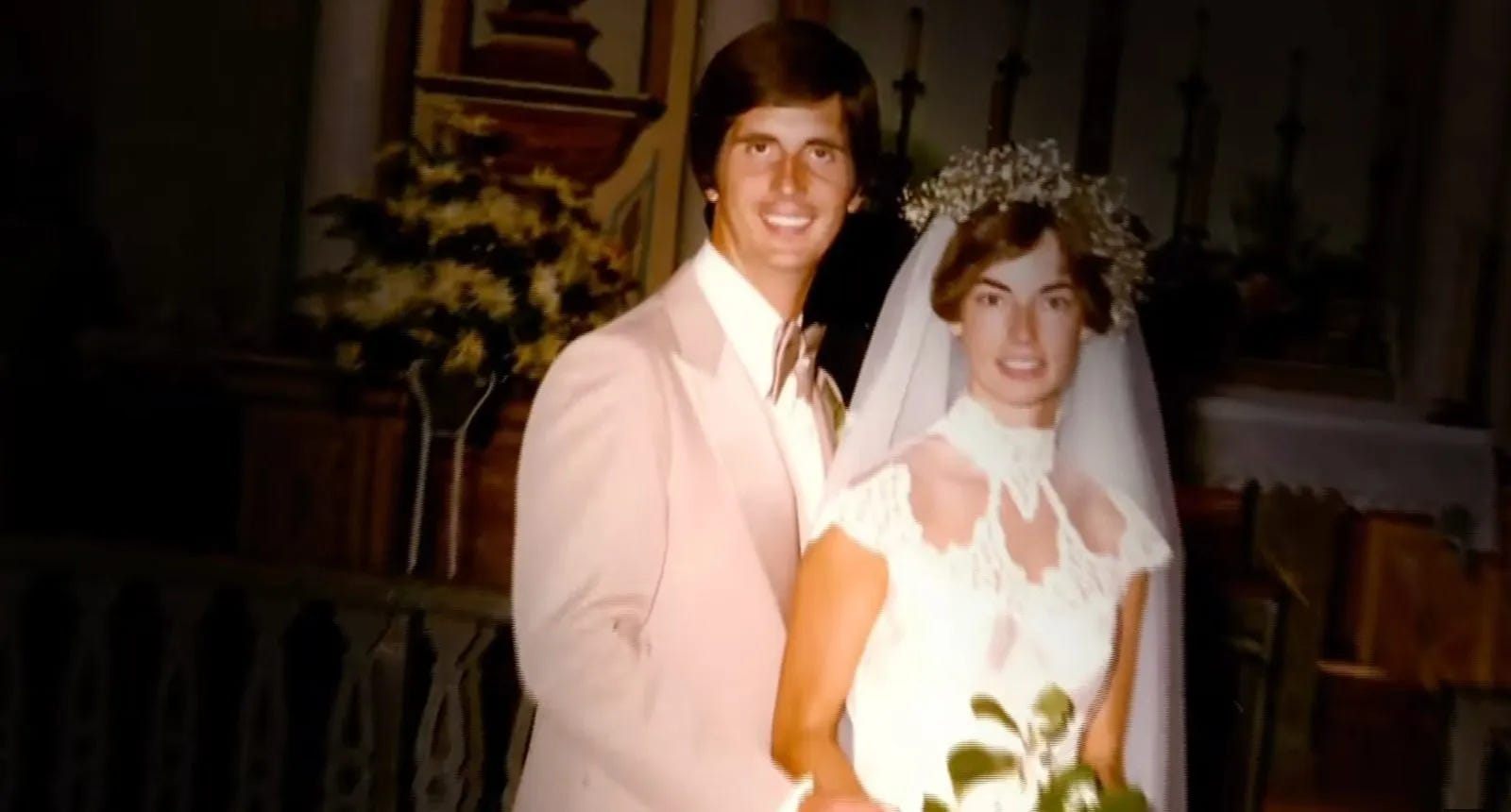
If you followed the news reports and the prosecution’s media briefings back when this case broke, you were told a definitive story. The narrative was that on the morning of January 22, 1983, Katherine’s estranged husband, William Gregory Mordick, drove to her Orange County home around 10:00 a.m. to pick up their two young daughters. According to the prosecution, William put the girls in his car, walked back into the house, slashed Katherine’s throat, left her on the dining room floor, and drove away.

The media supplied the motive without hesitation: William killed her to avoid paying child support and to ensure he didn’t lose custody of his daughters, especially with a bitter divorce court proceeding scheduled just six days later.
For 25 years, the case sat cold. When it was finally revived, the press announced that newly available DNA technology had definitively linked William to blood smears left at the crime scene. It sounded like an open-and-shut case of a killer finally caught by modern science.
But the legal and forensic realities of this case were far less definitive than what the public was sold. The entire timeline rested on the assumption that Katherine was murdered at 10:00 a.m. while William was at the house. The medical and eyewitness evidence, however, directly challenged that theory.
First, consider the autopsy and the science of gastric emptying. Katherine’s autopsy revealed that her stomach was essentially empty at the time of her death. Under normal physiological conditions, it takes a light meal two to four hours to clear the human stomach. The coroner’s estimate placed her time of death in a broad 36 to 48-hour window before the autopsy, which technically included the 10:00 a.m. hour.
However, investigators found physical evidence in the kitchen—unwashed cereal bowls and spoons sitting in the sink, indicating a meal had recently been eaten. If Katherine ate breakfast before 10:00 a.m. and her stomach was entirely empty when she died, forensic pathology dictates she most likely died well after 12:00 p.m. By that time, William was long gone from the property.
This medical timeline was firmly anchored by a police report taken shortly after the murder. William and Katherine’s four-year-old daughter told the police, and her aunt, that her father picked them up “right after breakfast.” If Katherine and the girls had just finished eating at 10:00 a.m., it is medically impossible for Katherine to have been murdered by William at that exact time with an empty stomach.
Then there is the eyewitness. A neighbor named Bonnie Pioch testified before a grand jury, and during William’s first trial, that she had a conversation with Katherine on Saturday afternoon. If a neighbor saw Katherine alive and well in the afternoon, William could not be the 10:00 a.m. killer.

Even the DNA evidence was more complicated than the media’s smoking-gun portrayal. The defense rightly pointed out that because William had previously lived in that house, his DNA could have been deposited passively at any time. Furthermore, investigators found unknown animal hair and unknown male DNA at the crime scene. These were massive investigative leads that were nearly impossible for the defense to effectively track down after a 25-year delay. The prosecution did counter this by pointing out that the DNA found on a closet door was a mixed profile, intertwining William’s blood with Katherine’s DNA, which is much harder to explain away as a passive deposit.
So how did William Mordick end up convicted of first-degree murder in 2010 and sentenced to 25 years to life?
Because the jury that convicted him never heard the whole story. The trial judge completely excluded the daughter’s original police report about breakfast and the neighbor’s afternoon eyewitness testimony, categorizing both crucial pieces of evidence as unreliable hearsay. The jury only heard the prosecution’s clean timeline. They were kept in the dark about the conflicting autopsy data and the neighbor’s sighting, and so the media simply reported the prosecution’s flawless narrative.
It took nearly another decade for the legal system to acknowledge the missing pieces. In 2019, the Ninth Circuit Court of Appeals ruled that the trial judge’s decision to hide the neighbor’s testimony and the four-year-old’s police statement violated William Mordick’s constitutional right to due process and a fair trial. The federal court reversed the denial of his habeas corpus petition and ordered that he be granted a new trial or released, officially highlighting that those excluded facts were absolutely critical to the truth.
So why didn’t you hear about this? Why didn’t the media blast the fact that a man was sitting in prison after an unconstitutional trial? The massive disconnect between a legally flawed conviction and the total silence from the press comes down to how the media consumes the criminal justice system.
Look at the timeline. The original news reports from major outlets and local papers were all published between 2008 and 2011. Back then, this story was fresh blood. It was a sensational, highly marketable narrative about a decades-old cold case finally solved by the magic of modern DNA. The reporters didn’t have to dig for the truth; they just lifted their information straight from the press releases handed to them by the Orange County District Attorney.
The legal system didn’t formally acknowledge that William Mordick received a fundamentally flawed trial until June 2019, nine full years after his conviction. He spent almost a decade fighting through the appellate system. The California state courts actually rejected his arguments, forcing him to take his fight all the way to the federal level before the Ninth Circuit Court of Appeals finally ruled that the trial judge had stripped away his constitutional right to due process.
But by the time that federal court overturned his conviction in 2019, the story wasn’t a simple, dramatic whodunit anymore. It had morphed into a dense, complicated legal battle over hearsay rules, federal precedents, and the constitutional right to present a complete defense. The brutal reality of the news business is that a ten-year-old appellate ruling about excluded witness testimony simply does not generate the explosive, viral clicks that a bloody murder conviction or a sudden DNA match does.
To make matters even quieter, the 2019 federal ruling was issued as an unpublished memorandum. It was handled by the federal court as a routine appellate correction, not a major, televised spectacle. There were no cameras waiting to capture the truth.
Legal analysts will tell you that this case is actually a landmark moment in Orange County jurisprudence. It perfectly exposes the ethical and practical nightmares of delayed justice and the sheer endurance required to survive the American appellate process. But the mainstream media didn’t care. They had simply moved on. They chose to ignore the 2019 reversal because, for them, the profitable, sensational part of the story had already ended back in 2010. They got their ratings, they got their headline, and they left the actual constitutional reality of a man’s life to be quietly swept up by the federal courts almost a decade later.