

The Ricky McCormick case is the kind of story that keeps cryptographers up at night. It’s not just a murder mystery; it’s a linguistic puzzle that has stumped the best minds at the FBI and the American Cryptogram Association for over a quarter-century.
While the 1990s were filled with high-profile tragedies, most had a clear—if unproven—narrative. The McCormick case is different. It’s quiet, it’s rural, and it’s centered on two scraps of paper that might as well be written in an alien language.
As of 2026, those notes remain one of the most significant unsolved ciphers in modern history.
On June 30, 1999, a field worker in St. Charles County, Missouri, came across a sight that would change the lives of the McCormick family forever. In a cornfield near West Alton, the body of 41-year-old Ricky McCormick was discovered.
The scene was bleak. McCormick’s body was badly decomposed, making it difficult for the medical examiner to determine a definitive cause of death. However, the location was the first red flag. McCormick didn’t drive, and there was no public transportation that reached that specific, isolated patch of land. He lived in St. Louis, miles away.
How did he get there? Why was he there?
Initially, the police didn’t have much to go on. There were no signs of a struggle at the scene, no weapon, and no obvious motive. It looked like a “dump job”—a place where a body is left after a crime has been committed elsewhere.
But the real mystery was hiding in Ricky’s pockets.
When investigators searched McCormick’s clothing, they found two crumpled pieces of paper. They weren’t shopping lists or phone numbers. They were handwritten blocks of code.
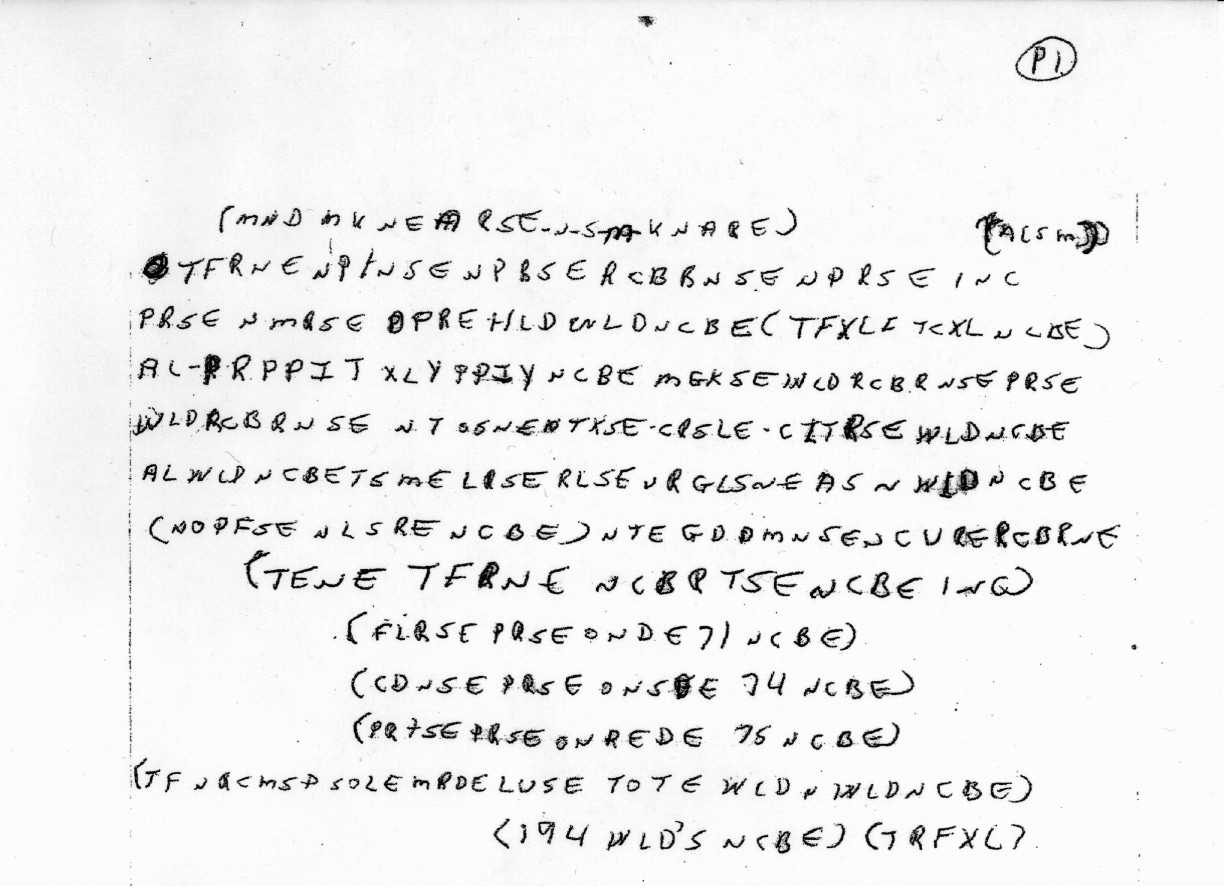
The notes consisted of roughly 30 lines of text, featuring a chaotic mix of capital letters, dashes, and parentheses. To the untrained eye, it looks like a child’s scribble or a random string of characters. But to the FBI’s Cryptanalysis and Racketeering Records Unit (CRRU), it looked like a challenge.
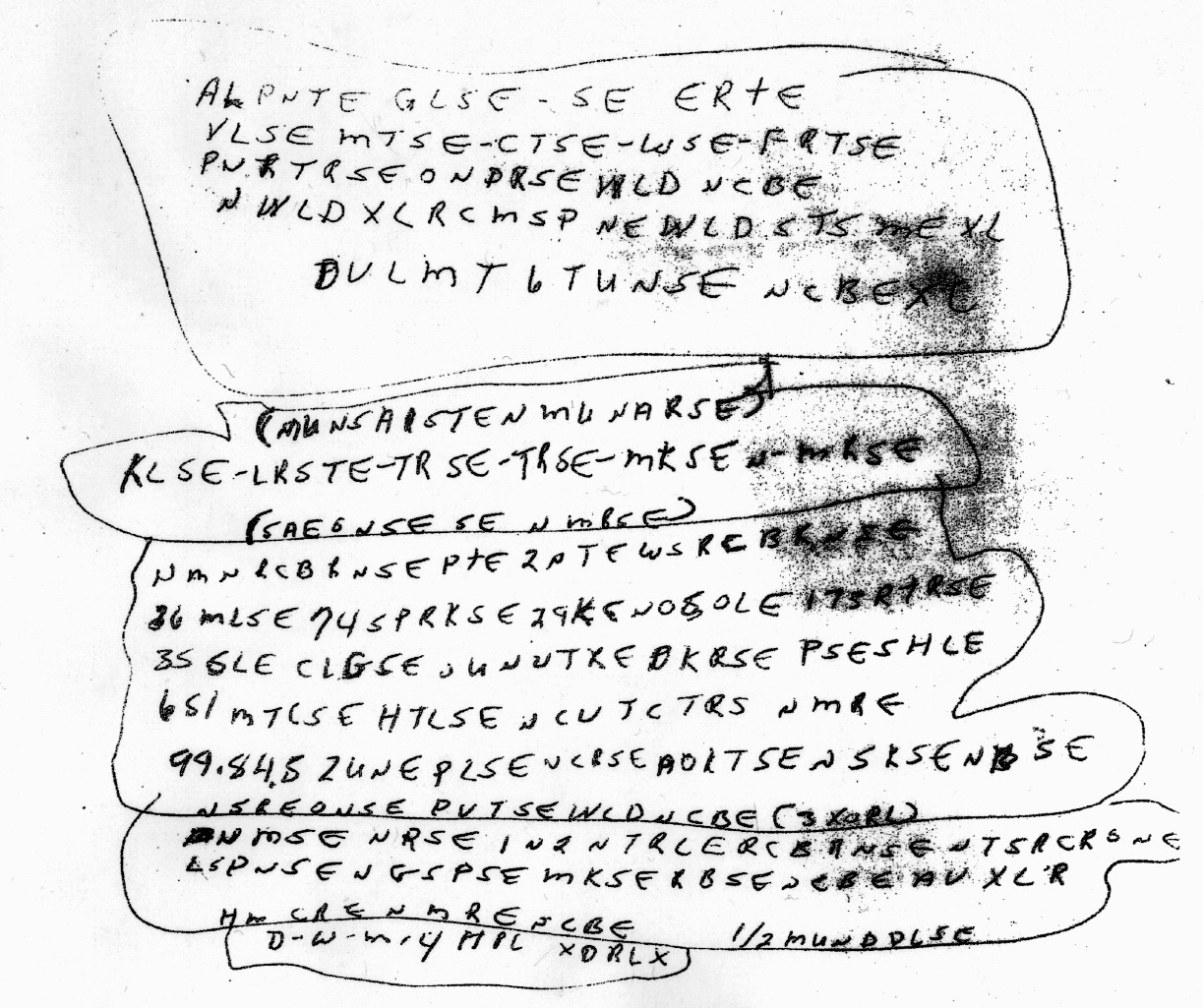
For twelve years, the FBI kept these notes a secret. They worked on them behind closed doors, assuming their top-tier codebreakers would crack the “McCormick Cipher” in a matter of weeks. They were wrong. In 2011, having hit a total dead end, the FBI took the unprecedented step of releasing the notes to the public, essentially crowdsourcing the investigation.
To understand the code, you have to understand the man.
