
In August 1983, a single complaint from a mother in Manhattan Beach, California, lit the match on what would become the longest and most expensive criminal prosecution in American history. Seven years. Up to $16 million of taxpayer money. And the result? Zero convictions. When I look back at the McMartin Preschool case, I don’t just see a failed legal battle; I see a terrifying cautionary tale about mass hysteria, the weaponization of child interviews, and what happens when the justice system completely caves to a moral panic.
The whole nightmare started when a woman named Judy Johnson told police her two-and-a-half-year-old son had been sexually abused by Raymond Buckey, a teacher at the prestigious preschool his grandmother founded. Hospital exams found absolutely no conclusive evidence. But instead of pausing to investigate, police arrested Buckey and did something unthinkable: they mailed letters to nearly 200 parents. The letter explicitly named him as a suspect and basically deputized these terrified, emotionally distressed parents to go home and interrogate their own toddlers about acts of sodomy and oral sex.
The media immediately took the bait. Local and national outlets engaged in absolute pack journalism, publishing wildly unverified claims that fueled a nationwide panic and completely erased any presumption of innocence.
Over time, the accusations morphed from inappropriate touching into full-blown “Satanic Panic” territory. Children were suddenly claiming teachers sacrificed animals, flushed kids down toilets into secret underground tunnels, and flew them around in hot-air balloons to abuse them.
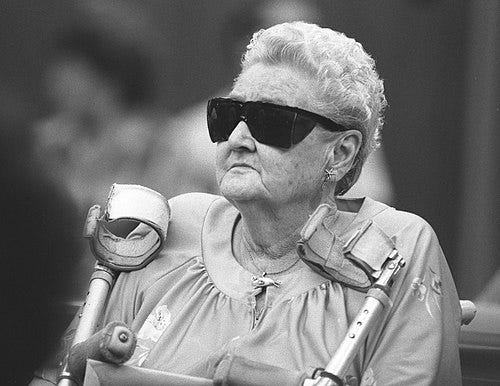
The most tragic, overlooked fact in all of this? Judy Johnson, the mother who sparked the entire investigation, was later diagnosed with acute paranoid schizophrenia. She died of alcohol-related liver disease before the trials even concluded—a massive detail that was initially withheld from the defense.
If you want to understand how hundreds of kids suddenly told these bizarre stories, you have to look at the deeply flawed investigation. The District Attorney’s office brought in the Children’s Institute International, led by a social worker named Kee MacFarlane. MacFarlane wasn’t even a licensed psychotherapist, yet she spearheaded the interviews. She operated on a highly dangerous premise: that children would naturally deny abuse unless they were aggressively pressured to confess.
Researchers later analyzed these tapes and found a textbook pattern of coercion they called the “SIRR” model—Suggestive questions, Social Influence, Reinforcement, and Removal from direct experience. Interviewers literally used puppets like “Mr. Alligator” and “Detective Dog” to ask kids to “pretend” and speculate about what “might” have happened. They used intense social pressure, telling the kids that “every single kid” had already told them the “yucky secrets.” They praised the children as “smart” when they made allegations and scolded them as “dumb” or “chicken” when they denied it.
Decades later, a former student named Kyle Zirpolo publicly recanted everything. He admitted he just made stories up because anytime he gave an answer the interviewers didn’t like, they just kept pushing until he gave them what they wanted.
Despite a total lack of physical evidence, seven staff members were indicted in 1984 on hundreds of counts. The preliminary hearing alone dragged on for an agonizing 18 to 20 months. Eventually, a new district attorney looked at the incredibly weak evidence and dropped charges against five of them. Only Raymond Buckey and his mother, Peggy, went to trial. The prosecution had nothing but these tainted testimonies and highly disputed medical exams. Desperate parents even commissioned an archaeological dig to find the supposed secret underground tunnels. All they found was an old trash pit from before the school was even built.
After three years of trial, Peggy was acquitted. Raymond faced two trials, both ending in hung juries, before all charges were finally dismissed in 1990. He spent five years in jail waiting for a conviction that never came.
The human toll was devastating, but it did force a massive change in how the legal and psychological fields handle child abuse cases. The absolute disaster of those interviews led to the creation of the NICHD Investigative Interview Protocol.
Today, the standard is building rapport, explaining ground rules like “tell the truth,” and strictly using open-ended questions instead of leading ones. We now have studies proving this method actually gets accurate testimony and helps put real abusers away.
It also changed the courtroom itself. The McMartin era directly influenced the landmark 1990 Supreme Court decision Maryland v. Craig. The Court ruled that a child witness could testify via closed-circuit television if facing their abuser would cause severe emotional distress. It was controversial—Justice Scalia wrote a fiery dissent arguing that face-to-face confrontation is a strict constitutional right—but it created a framework to protect vulnerable kids while still allowing for cross-examination.
The McMartin Preschool trial is one of the darkest chapters in American true crime. It showed exactly how destructive uncritical media, mass hysteria, and unchecked investigative zeal can be. But at the very least, those catastrophic failures forced the justice system to evolve, ensuring that the devastating mistakes of the 1980s are a lesson we never have to learn twice.