
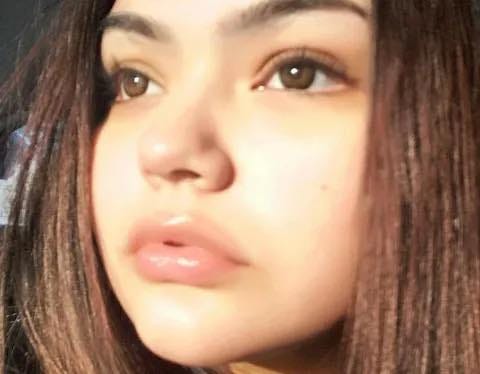
Nineteen-year-old Serena Chelsea McKay—known as “Serenity” to the people who loved her—was an artist. She was a high school senior, just weeks away from walking across the stage to graduate from Sagkeeng Anicinabe High School. But in April 2017, her life was violently cut short. Her murder didn’t just rob a family of their daughter; it became a horrifying public spectacle that exposed the darkest sides of social media, the lies perpetrators tell to save themselves, and the ongoing, systemic crisis of Missing and Murdered Indigenous Women and Girls in Canada.
To understand what happened, you have to look at where it happened. Sagkeeng First Nation is a community of about 4,000 people sitting 100 kilometers northeast of Winnipeg. When Serena moved there, the community was already carrying a massive amount of trauma. A 2015 report showed Sagkeeng had the highest number of unsolved MMIWG cases in the country, including the devastating losses of Tina Fontaine and Fonessa Bruyere. Serena walked into a place already reeling from a history of violence and vanished women.
The nightmare started at a local house party on Saturday, April 22. There was heavy drinking, and witnesses said Serena got into an argument with some of the other teenagers over alcohol. Late that night, things escalated. Serena was kicked out of the house and then viciously attacked in the yard by two teenage girls, aged 16 and 17. Because of Canada’s Youth Criminal Justice Act, their names are legally protected and hidden from the public.
The violence was captured in two separate videos recorded on the 17-year-old’s phone. In a 48-second clip, you can hear the 16-year-old say, “I don’t want to f**king see her alive,” while repeatedly punching and kicking Serena. A second, nine-second clip shows a heavy boot stomping on Serena’s face at least six times, loud enough that you can hear bones cracking. Serena was on the ground, largely defenseless, crying and begging them to stop. You can hear her say, “I’m so sorry.”
After the beating, the two girls left Serena outside in near-freezing weather without her phone or any of her belongings, and simply went back inside to go to sleep. Serena was reported missing to the RCMP the next evening. Two hours later, community members found her body.
Almost immediately, the killers started spinning a narrative to protect themselves. The 16-year-old actually posted a smiling selfie on Snapchat, partially covered in blood, with the caption “just chilling.” In private messages, one of the suspects told a friend that it was just a normal fight, that she broke Serena’s nose, but that Serena was up and walking when they left her. Once they realized her body had been found, panic set in, and the suspect begged the witness to lie and tell the police the fight wasn’t that bad.
But the autopsy destroyed that fabricated story. The forensic pathology report documented a staggering 67 separate injuries on Serena’s body. Nineteen of those were to her head, including a fractured skull and bleeding in her brain stem from her head being violently snapped back. She wasn’t up and walking. The pathologist testified that the primary cause of death was hypothermia. The sheer trauma of 67 debilitating injuries, combined with a blood alcohol level of 0.22, made it neurologically and physically impossible for Serena to seek shelter. The prosecution proved that by beating her that severely and abandoning her in the cold, those teenagers killed her.
What made Serena’s murder gain international notoriety was how it was broadcasted. The videos were texted around and eventually uploaded to Facebook. The longer video stayed active on the platform for at least four hours before it was finally pulled down—and only because reporters flagged it. It sparked a massive global debate about how tech companies handle violent content. At the time, Facebook was relying on a reactive system of human flaggers, meaning the video kept getting re-uploaded and watched thousands of times. The public backlash was so intense that Mark Zuckerberg actually announced they were hiring 3,000 more content reviewers just to deal with graphic videos like this one.
For Serena’s family, the justice system offered almost no comfort. Because the killers were underage, the sentences felt vastly disproportionate to the absolute brutality of the crime.
The 17-year-old pleaded guilty to second-degree murder. The judge didn’t hold back, stating that recording and sharing the attack showed a complete lack of remorse. She was handed the maximum youth sentence for second-degree murder: 40 months in custody and 23.5 months of community supervision. By 2020, she tried to get early release to attend university, but the court shut it down after looking at her institutional record, which included forging a staff signature, giving herself tattoos, refusing lockup orders, and writing documents that showed she was still trying to distance herself from accountability.
The 16-year-old—the one who was the main aggressor and explicitly threatened Serena’s life on camera—somehow pleaded down to manslaughter. The Crown tried aggressively to get her sentenced as an adult, but the judge cited her developmental history, PTSD, and severe substance abuse to keep her in the youth system. She received the maximum youth sentence for manslaughter: just two years in custody and one year of supervision.
When those sentences were read, Serena’s family erupted in the courtroom. They shouted that there was absolutely no justice for a life taken with such astonishing cruelty.
The National Inquiry into MMIWG pointed to Serena’s murder as a devastating example of lateral violence—where marginalized people, weighed down by the systemic trauma of colonization and residential schools, direct that trauma inward and attack one another.
After her death, the communities of Sagkeeng and Winnipeg held vigils, drumming circles, and marches, desperately demanding an end to the MMIWG crisis. When Serena’s high school class graduated a few weeks later, they left an empty chair with a red gown draped over it. They also established an arts bursary in her name. Serena’s life was stolen in a horrific act of violence, but her community made sure her memory, her art, and the undisputed facts of what happened to her would not be erased.