
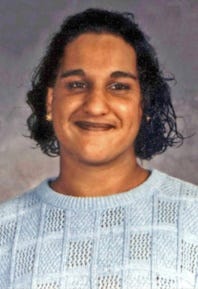
When a horrific crime involves teenagers, the media instinctively reaches for a narrative that makes society feel a little less guilty. They look for ways to soften the edges, turning a catastrophic failure of humanity into an after-school special about the dangers of peer pressure.
On November 14, 1997, fourteen-year-old Reena Virk was brutally murdered under the Craigflower Bridge in Saanich, British Columbia. It was a horrifying crime perpetrated by a group of her own peers, and it immediately sparked international headlines. But the media frenzy that followed didn’t actually tell the truth about what happened to Reena. Instead, it created a massive moral panic about “girl-on-girl violence” and “mean girls.” The press actively distorted the facts, erased critical elements of race, and severely downplayed the sheer, unadulterated brutality of the crime.
If we want to actually understand what happened to Reena Virk, we have to strip away the media-generated myths and look directly at the forensic evidence, the judicial proceedings, and the sociological reality of who she was and who killed her.
The most pervasive lie told about this case is that it was simply schoolyard bullying that got out of hand. The media heavily framed Reena’s murder as a petty teenage spat, labeling the attackers as mean girls. But the clinical and forensic realities reveal a level of violence that makes the word “bullying” feel like a sick joke.
Reena was not just bullied; she was swarmed and beaten by a group of youths known as the Shoreline Six, alongside a sixteen-year-old male named Warren Glowatski. After surviving that initial, brutal attack, a severely injured Reena staggered away, trying to cross the bridge to safety. She was then hunted down by Glowatski and fifteen-year-old Kelly Ellard.
Forensic pathologist Dr. Laurel Gray testified at trial that the blunt force trauma Reena sustained was comparable to a pedestrian being struck in a high-speed car crash. She suffered eighteen distinct blows to the head. She had a sneaker imprint permanently stamped onto her forehead. Her internal tissues were literally crushed against her backbone. And finally, the autopsy revealed the presence of pebbles and silt lodged deep in her throat. That forensic detail proved an agonizing truth: Reena was still alive and drawing breaths when Ellard and Glowatski dragged her into the shallow tidal pool of the Gorge Waterway and forcibly drowned her. Framing this prolonged, deliberate homicide as petty bullying severely minimized the catastrophic violence these teenagers chose to inflict.
Then there is the issue of the motive. To explain why Reena was targeted, mainstream news outlets relentlessly pointed to her physical appearance. They repeatedly emphasized her weight, noting she was around 200 pounds, and pathologized her body as the primary reason she was treated as an outcast.
By focusing entirely on her weight, the media systematically erased the reality of race and systemic marginalization. Reena was a South Asian girl. Her parents, Suman and Manjit Virk, were immigrants from India who had converted to the Jehovah’s Witness faith. This deeply complex intersectional identity made Reena a minority within a minority, isolating her in both her predominantly Sikh community and the broader white society of Victoria.
At the time, the media and local police largely denied that racism played any role in the murder, using the excuse that some of the initial attackers were also non-white. But the facts of the assault tell a different story. The initial attack began with a highly symbolic, racially charged act: Nicole Cook, the leader of the group, took a lit cigarette and stubbed it out directly on the center of Reena’s forehead—the exact spot where a bindi is traditionally worn in South Asian cultures. Furthermore, Syreeta Hartley, who was Glowatski’s girlfriend at the time, actually testified in court that Glowatski explicitly admitted to her that his involvement was partly motivated by racism. The press just didn’t want to hear it.
The media also went out of its way to coddle the killers, presenting them as innocent, middle-class young ladies who had just made a single, inexplicable mistake. During the investigation, Kelly Ellard actively tried to use her gender and perceived social status as a legal shield. In a recorded police interview, she famously scoffed, telling investigators that she was a girl, that she never thought girls got arrested for murder, and that it just wasn’t very ladylike.
In reality, Reena’s attackers were deeply embedded in a violent youth subculture that actively idolized crime. They fetishized gangsta rap and mafia bosses like John Gotti, even calling themselves the Crip Mafia Gang. They used a manufactured facade of urban violence to establish their social hierarchy. The youth witnesses who stood by and watched the beating didn’t act like terrified, innocent kids; they exhibited profound emotional detachment. Some stated the murder was simply not very interesting, prioritizing a strict code of silence to protect themselves and their friends from the authorities.
But perhaps the greatest disservice the media did to Reena was trying to force her into the mold of the “perfect victim.” In order to build public sympathy, early accounts often tried to sanitize her struggles. But the truth is, Reena was a complex, flawed, and deeply rebellious fourteen-year-old. She was desperately seeking a place to belong. She fought bitterly against her family’s strict religious rules. Tragically, she had even falsely accused her own father of molestation in a desperate attempt to get placed into the foster care system, entirely because her peers had convinced her it would give her more freedom and social acceptance.
We have to be able to hold Reena’s teenage rage, her reckless choices, and her profound loneliness with care. As Quinn Shephard, the creator of the 2024 Hulu miniseries Under the Bridge, correctly noted, it is vital that we understand Reena as a complex, messy human being without demanding she fit the myth of the perfect victim in order to care that she was murdered.
The justice system’s handling of the case ultimately highlighted the divergent paths of the two primary killers. Warren Glowatski was convicted of second-degree murder in 1999. Over the years, he actually took full responsibility for his actions. He embraced his Métis heritage, engaged heavily in restorative justice, and expressed profound remorse. He even personally apologized to Reena’s parents. In an unbelievable act of grace, Suman and Manjit Virk offered him their forgiveness and actually supported his day parole in 2007. Glowatski was granted full parole in 2010.
Kelly Ellard’s trajectory was the exact opposite. She maintained total denial, dragging the Virk family through a multi-year legal nightmare that encompassed three separate trials and multiple appeals. She was ultimately convicted of second-degree murder, a conviction upheld by the Supreme Court of Canada in 2009. Ellard eventually changed her name legally to Kerry Marie Sim and was granted day parole in 2017. However, she never shed what the parole board called an anti-social and delinquent value system. In July 2025, her day parole was officially revoked after she tested positive for methamphetamine, exhibited threatening behavior toward prison staff, and was caught taking non-prescribed medication from other inmates.
Through all of this unimaginable grief, Manjit and Suman Virk dedicated the rest of their lives to community advocacy, fighting bullying, and promoting restorative justice across British Columbia. They were awarded the Anthony J. Hulme Award of Distinction in 2009, which is the province’s highest honor in community safety and crime prevention. Manjit wrote a book in 2008 called Reena: A Father’s Story to humanize his daughter and piece together the reality of her life. Suman passed away in June 2018 following a tragic choking incident, but the couple’s lifelong commitment to justice ensured their daughter’s death was not in vain.
The murder of Reena Virk is a permanent scar on the Canadian legal and social consciousness. When we finally look past the media-generated moral panics that tried to blame girl power or Reena’s weight, we are forced to look at the much more uncomfortable truths. We have to look at intersectional marginalization, the absolute brutality of isolated youth subcultures, and the systemic failures that leave racialized children unprotected. Reena’s story demands that we remember her not as a sanitized, media-friendly myth of schoolyard bullying, but as a desperately lonely fourteen-year-old girl who deserved to be seen, accepted, and kept safe.