

The night of June 29, 2002, started like a thousand other nights in Nanaimo, British Columbia. It was the Canada Day long weekend. The air was warm, the music was loud, and the city’s pulse was beating inside “The Jungle”—the gritty, beloved, and notorious nightclub that served as the epicenter of Nanaimo’s social life.
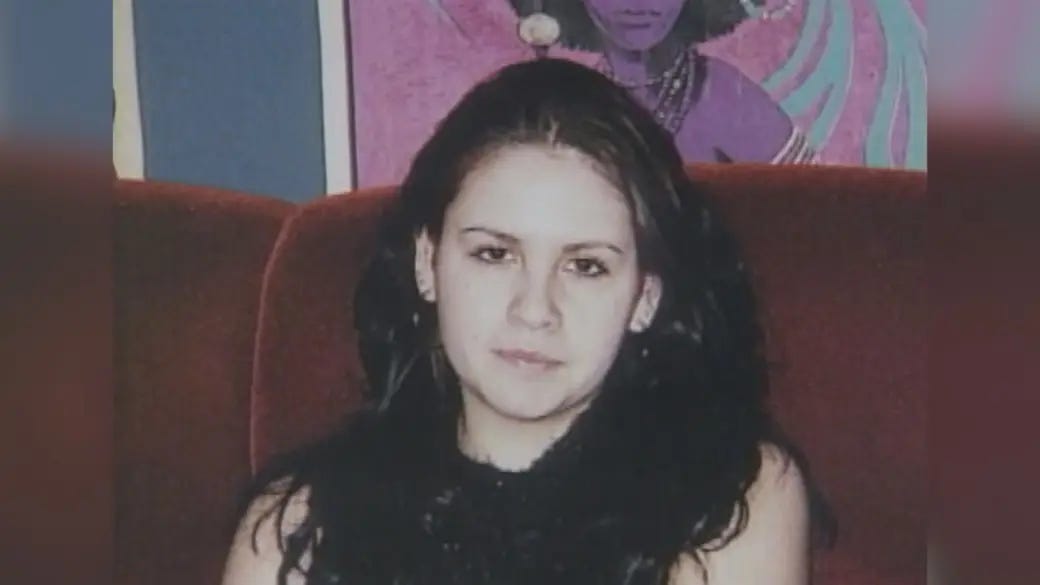
Lisa Marie Young, a vibrant 21-year-old Indigenous woman, was there to celebrate a friend’s birthday. She was happy. She was hungry. And by sunrise on June 30, she would become the face of one of the most haunting and frustrating cold cases in Canadian history.
For over two decades, the mainstream media has treated her disappearance as a tragic mystery—a “party girl” who vanished into the ether. But on the streets of Nanaimo, there is no mystery. There is only a terrifying, open secret.
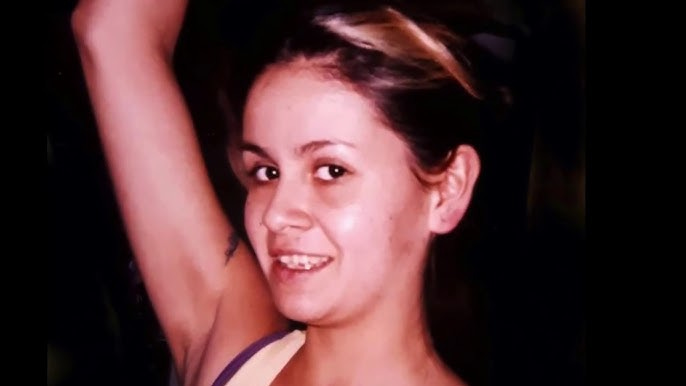
The truth about what happened to Lisa Marie Young isn’t lost; it’s being waited out. It is a story of wealth protecting crime, of “street” enforcers doing the dirty work, and of a clock that is ticking down as the witnesses—the only people who can speak for Lisa—are dying one by one.
The Night the Music Stopped
To understand why this case remains unsolved, you have to understand the ecosystem of Nanaimo in 2002. It was a small city with a big drug problem, where social circles that should never have touched—the wealthy elite and the street-level criminal element—often collided in the VIP booths and parking lots of nightclubs.
Lisa left The Jungle around 2:30 AM with a group of friends. They were headed to a house party in the Cathers Lake area. But as the night wore on, the party wound down, and Lisa was still hungry. She couldn’t find any vegetarian food at the house.
It was a mundane problem—late-night hunger—that led to a fatal decision.
Around 3:00 AM, Christopher William Adair, a young man at the party, offered to drive her to a sandwich shop. He wasn’t driving a beat-up Honda; he was behind the wheel of a distinctive, maroon-red Jaguar. It was a car that screamed money, a car that belonged to his grandmother, Gerry Adair, a prominent business figure in Qualicum Beach.
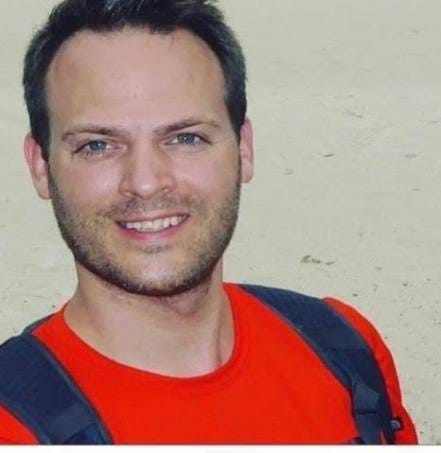
Lisa got into the passenger seat. The Jaguar pulled away. And that was the moment the trap snapped shut.
“They Won’t Let Me Leave”
The most chilling piece of evidence in this case is not a weapon or a body, but a message.
Shortly after leaving the party, Lisa contacted her friend, Dallas Hulley. For years, there has been debate over whether it was a text or a call, but the content has never been in dispute. Lisa’s voice, or her thumbs, conveyed a sudden, terrifying realization:
“Come get me, they won’t let me leave.”
Note the pronoun: “They.”
Lisa wasn’t just with Christopher Adair. She was with a group. And she wasn’t at a sandwich shop. The police believe she was taken to another location entirely—likely a house on Bowen Road, a known hang-out for Adair’s associates.
Dallas, perhaps not understanding the gravity of the situation or thinking it was just late-night drama, didn’t call 911 immediately. By the time the sun came up and the panic set in, the red Jaguar was gone, and Lisa had vanished from the face of the earth.
The Unlikely Alliance: The Socialite and the Enforcers
This is where the “official” police narrative usually stops, and where the “street” reality begins.
Why would Christopher Adair—a man with access to a Jaguar and a wealthy family trust—be involved in a violent abduction? And who were “they”?
The answers lie in the dark intersection of Nanaimo’s drug trade. Adair was not a clean-cut socialite; police files reveal he had a history of fraud, assault, and credit card scams. He was a man who liked to play gangster, using his family’s money to buy his way into the criminal underworld.
But a rich kid in the drug game is a target. He needs protection. He needs muscle.
Enter the Currie Brothers.
William “Bill” Curry and his associates were not from Adair’s world of country clubs and steam-cleaned luxury cars. They were known for their street reputation. They were the “muscle” to Adair’s “money.”
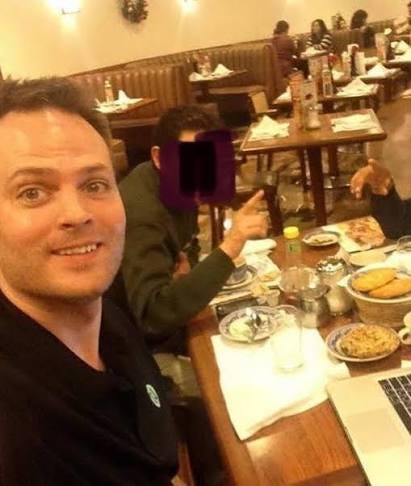
For years, locals have whispered that the relationship was transactional. Adair allegedly owed debts—significant ones—to people higher up the food chain. In this dark calculus, the Currie brothers were likely his handlers or his enforcers. The theory that has persisted for two decades is that Lisa wasn’t just a random pickup; she was a peace offering, a way for Adair to settle a debt or prove his loyalty to the group he was desperate to impress.
The Wealth Shield
If a poor man had kidnapped a woman in a distinctive car, he would have been arrested by noon. But Christopher Adair had something a poor man doesn’t have: a Wealth Shield.
Almost immediately after Lisa was reported missing, the machinery of privilege roared to life.
The Threat of Lawsuits: Adair’s grandmother, Gerry Adair, reportedly threatened to sue any media outlet that named her grandson as a suspect. In 2002, this threat was effective. It created a “media chill” that kept Christopher’s face off the front page, allowing him to move in the shadows while Lisa’s family begged for answers.
The Steam-Cleaned Car: This is the most infuriating detail of the entire case. Before police could seize the red Jaguar for forensic testing, it was sold. But before it was sold, it was steam-cleaned and detailed.
Think about the logistics of that. A 20-something panic-stricken killer doesn’t professionally detail a car at 4:00 AM on a Sunday. That requires resources, forethought, and assistance. It requires a “clean-up crew.”
The fact that this vehicle—a mobile crime scene—was allowed to be sanitized and sold is a catastrophic failure of the investigation, or a testament to the power of the Adair family’s influence.
The Darkest Secret: The “Filming” Rumors
While the police searched the woods, a much darker rumor began to circulate in the Nanaimo underground. It is a rumor that has never been proven in court, but one that has been corroborated by independent sources for years.
The rumor is that Lisa was not just killed; she was filmed.
An anonymous informant once called the RCMP claiming the existence of a “snuff film”—a recording of the assault and murder. The theory is that this video was created as “insurance” or “leverage” within the criminal group. If everyone is on tape, no one can talk.
This aligns with disturbing accounts from other women—witnesses who have never gone to the police but have spoken in hushed tones to friends and family. These sources describe a pattern of behavior involving the Currie brothers and their circle: attempts to lure women with money, not for sex, but for “filming.”

I have personally been made aware of accounts from sources who are no longer with us—women who described this exact predatory behavior. They spoke of being propositioned to be “in a movie” or lured to the same house on Bowen Road where Lisa was suspected to be held.
These women didn’t go to the police because they were terrified. They saw what happened to Lisa. They saw the “Wealth Shield” protect Adair. They feared that if they spoke up, they would be next, or that the “tape” of them would be released.
So, they stayed silent. And now, many of them are dying.
The Graveyard of Evidence
This brings us to the most tragic aspect of the Lisa Marie Young case today. The truth isn’t just being hidden; it is being buried, one funeral at a time.
Homicide investigations rely on two things: physical evidence and witness testimony. The physical evidence—the Jaguar—was scrubbed clean and sold 20 years ago. That leaves witness testimony.
But the witnesses are dying.
Dallas Hulley: The man who received Lisa’s final, terrifying text—”Come get me”—died in 2018. He was struck by a car while walking on the highway. With him died the only direct line to Lisa’s final moments. His memory of her voice, the exact time of the call, the nuances of her fear—it’s all gone.
The Silent Sources: The source I mentioned earlier—who knew about the filming and the luring attempts—has also passed away. Their testimony is now “hearsay from a decedent.” It cannot be used in court. It cannot be cross-examined. It is lost to history, existing only as a ghost story.
This is the strategy of the guilty: Wait them out.

Every year that passes, another potential witness gets old, gets sick, or gets into an accident. Every death degrades the case. The “street” knows exactly who did this. They know Adair drove the car. They know the Curries provided the house and the muscle. They know the body was likely moved from the Nanaimo Lakes to the deep, unforgiving currents of the Nanaimo River to ensure she was never found.
But knowing it and proving it are two different things, especially when the voices of the accusers are being silenced by death.
The Escape
And where is the prime suspect?
Christopher William Adair is not sitting in a Canadian prison. He is not even in the country. Investigative reports and tracking by diligent journalists like Laura Palmer (Island Crime) have located him living comfortably in Turkey.
He is reportedly running a business, living a free life in a sunny coastal town, thousands of miles away from the rainy, dark forests of Nanaimo where Lisa’s remains lie. He is out of reach of the RCMP unless charges are laid. And charges won’t be laid without evidence.
It is the ultimate insult to injury. The wealthy grandson used his privilege to escape the consequences, leaving the “street” associates to deal with the rumors and the heat, while Lisa’s family is left with nothing but a photo and a prayer.
The Open Wound
The disappearance of Lisa Marie Young is not a cold case. It is a frozen one. Frozen by fear, frozen by money, and frozen by the silence of those who know the truth.
The police files are full of “persons of interest.” The rumors are full of horrific details about filming and “clean-up crews.” But the courtroom is empty.
We are watching the slow death of justice. As the years roll on, the “street truth”—the story of the red Jaguar, the Curries, and the video—is fading into urban legend. The people who saw things that night are taking their secrets to the grave, and with every funeral, Christopher Adair sleeps a little more soundly in Turkey.
But the text message remains. “Come get me, they won’t let me leave.”

It is a plea that echoes across two decades. We couldn’t get her then. And unless someone breaks the silence before they die, we may never get her back.