
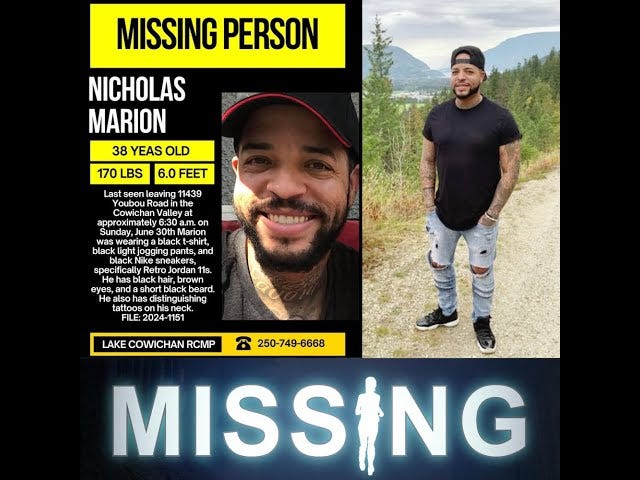
The June 30, 2024, disappearance of 38-year-old Nicholas (Nick) Marion in Youbou, British Columbia, was initially presented by local media as a tragic, straightforward missing person case. However, a closer examination of the facts, investigative reports, and documented evidence provided by his biological family reveals a stark contrast between the mainstream media’s narrative and the unsettling details that appear to be hidden from the public eye.
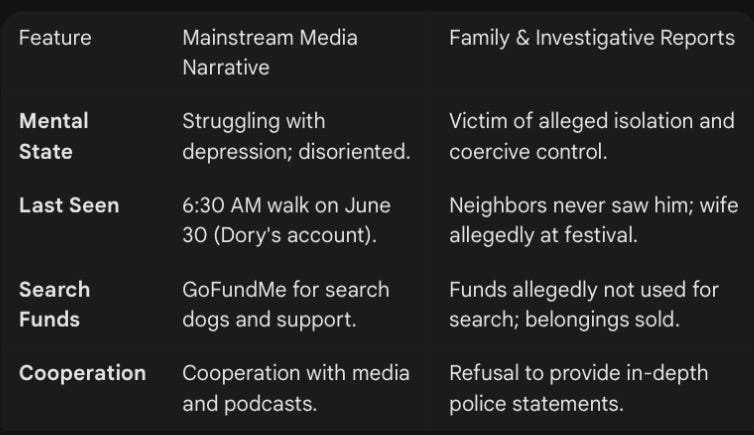
According to official police press releases and initial news reports, Nicholas Marion—an Orlando, Florida native and former Disney World dancer—was visiting Lake Cowichan for the Laketown Shakedown music festival with his wife, Dory LaFrance. The public narrative, heavily shaped by Dory’s statements to the media, paints a picture of a man struggling with deep depression following his mother’s death.
Dory reported that at 6:30 AM on June 30, an agitated Nick simply sat up in bed, announced he was going for a walk, and left the property without his phone, wallet, or jacket. In the weeks that followed, the media highlighted Dory as a desperate, grieving widow who spearheaded a GoFundMe campaign to finance private canine search teams after the RCMP and Cowichan Search and Rescue suspended their official efforts. The press also widely circulated reports of unconfirmed sightings of Nick at Pine Point and Maple Grove campgrounds on July 1, suggesting he was lost and disoriented in the woods.
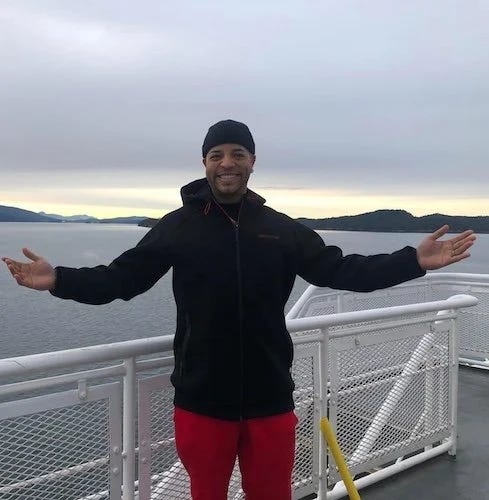
While the media accepted the 6:30 AM departure narrative, significant discrepancies suggest a “missing time” in the timeline that challenges the official story.
The Invisible Guest: Testimony from neighbors adjacent to the Youbou trailer property claim they never saw Nick at all during the festival weekend, raising questions about whether he was actually present at the property.
Contradictory Movements: Witness accounts suggest Dory was already at the festival grounds setting up early on the morning of June 30, fundamentally contradicting her claim that she watched him walk out the door of the residence at 6:30 AM.
Debunked Sightings: The unconfirmed sightings of Nick on the trails have been heavily scrutinized and largely debunked by investigators. Nick was a 6-foot-tall man with highly visible neck and arm tattoos, yet virtually no one in the crowded festival town credibly saw him after the alleged walk began.
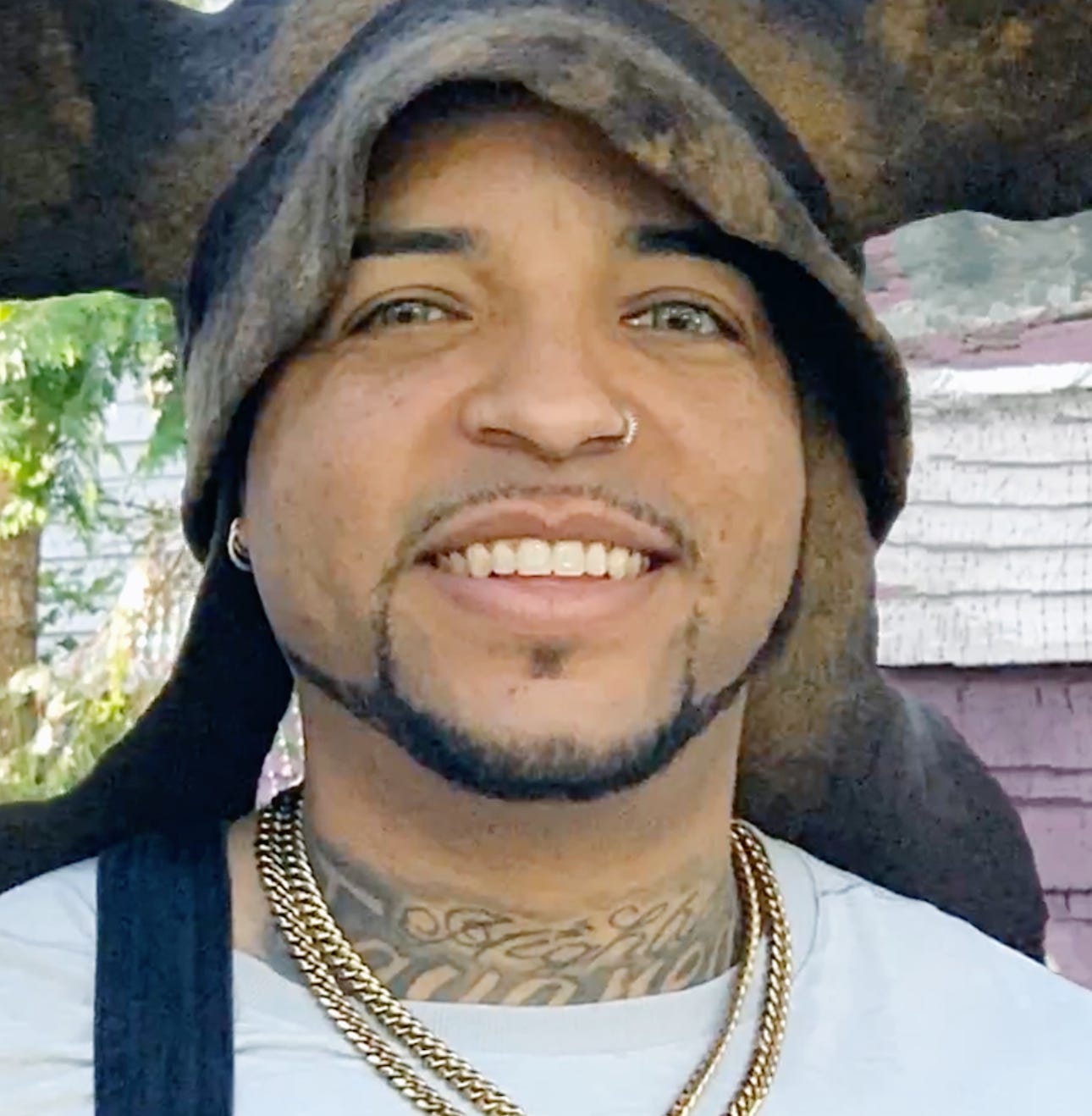
The media largely omitted the complex and allegedly abusive dynamics leading up to Nick’s disappearance. According to a “documented paper trail” of communication logs possessed by his family, a pattern of isolation had been established years prior.
The family alleges that Nick was brought into Canada illegally, rendering him unable to work and entirely dependent on his wife for finances and survival. Over five years, this isolation reportedly intensified; family members claim Dory ensured she was within hearing distance during his phone calls, preventing him from having a single private conversation with his relatives in the United States. In the eyes of the family, this was not just a marriage, but a system of coercive control.
Perhaps the most alarming contradictions involve the actions taken immediately following Nick’s disappearance. While a GoFundMe campaign raised nearly $10,000 ostensibly to fund search dogs and living expenses, Nick’s family claims that none of this money was actually spent on the search.
Instead, a series of rapid “erasure” actions took place:
Disposal of Belongings: Dory moved out of their apartment within months and immediately began selling Nick’s personal belongings—including his hats—on Facebook Marketplace without offering them to his grieving relatives.
Digital Erasure: Social media records indicate that someone logged into Nick’s accounts after he vanished to lock out his family and systematically delete photos, including the final pictures of Nick with his late mother.
Radio Silence: Communication with his biological family was cut off almost immediately after the initial search efforts stalled.
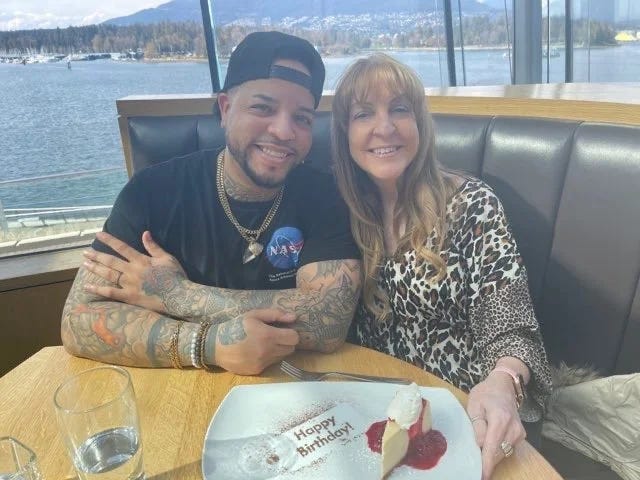
The most glaring omission in standard media coverage is the primary witness’s relationship with law enforcement. While Dory has appeared on true crime podcasts like True North True Crime and The Vanished to broadcast her narrative, she has reportedly refused to provide an in-depth, in-person statement to the RCMP.
The RCMP allegedly informed the Marion family that Dory cited “emotional frailty” as her reason for avoiding interviews and has since stopped taking investigators’ calls entirely. Furthermore, emails and text messages documented by the family show her actively discouraging the hiring of an objective private investigator. This hostility culminated in documented interactions between Nick’s biological family and Dory’s adult son, who allegedly sent derogatory messages to the family, callously telling Nick’s terrified father that his son was “dead in the woods somewhere, deal with it.”
The disappearance of Nicholas Marion presents a profound "Media vs. Report" paradox. While the public sees a story of a depressed man lost in the Canadian wilderness, the investigative reality suggests a much darker possibility.
The truth behind Nick Marion's disappearance remains obscured. As private investigative groups like "Please Bring Me Home" continue systematic searches of Lake Cowichan, the family remains steadfast in their belief that the key to finding Nick lies not in the woods, but in the inconsistencies of the narrative provided by those closest to him.