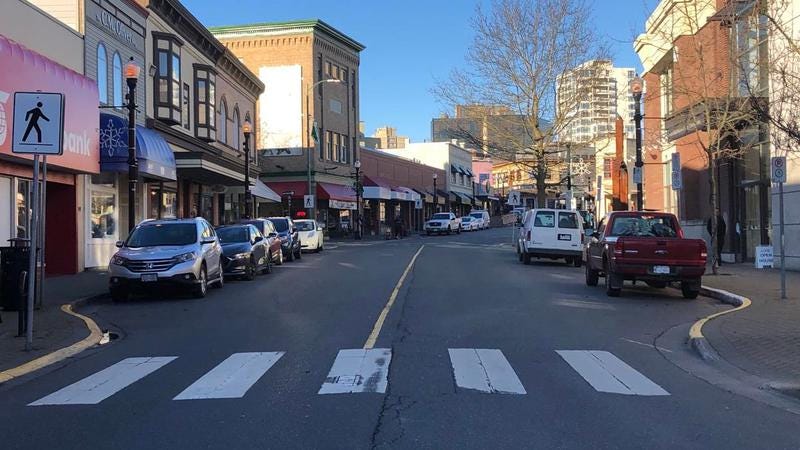
If you lived in Nanaimo in the early 2000s, you know that the morning paper didn’t always tell the whole story. There was the official version of events—sanitized, polite, and clinical—and then there was the truth whispered by first responders and neighbors over backyard fences.
For over twenty years, a discrepancy has haunted the residents who remember the tragedy of November 1, 2002. The newspapers reported that a young mother named Laurine Aune killed her two-year-old daughter, Kyla, with a knife. It was presented as a heartbreaking case of mental illness. But the “street” knew something else. The street knew details about hearts, delusions, and mutilation that never made it to print.

This is the story of what actually happened at the Buttertubs Marsh apartments, and why the media and the courts watered it down.
The Official Narrative: A Clinical Tragedy
If you search the archives of the Nanaimo Daily News or the Times Colonist from November 2002, you will find a tragic but standard report. Police were called to a home near Wakesiah Avenue, where they found 26-year-old Laurine Marie Aune and the body of her daughter, Kyla.

The official cause of death was listed simply as “cutting the throat.”
The motive was presented clearly in court: Laurine was suffering from severe psychosis. She had a history of mental illness dating back to her teenage years. She told the court she was “commanded” to do it by voices and believed she was “ending Kyla’s pain” to save her from a life of suffering.
In 2004, she was found Not Criminally Responsible by Reason of Mental Disorder (NCRMD). The judge ruled she was too sick to understand her actions were wrong, and she was sent to a psychiatric hospital instead of prison.
That was the story the public received. A sick mother, a knife, and a system that intervened too late.

The “Street” Truth: The Delusion of Saving
But local memory is stubborn. For two decades, people who lived near the marsh have insisted the details were far more gruesome. You remember hearing that she “ate her heart” or removed it to “save her from delusional dangers.”
You are almost certainly right.
While the court documents sanitize the act to a knife wound, the psychology of altruistic filicide—killing a child to save them—often involves a delusion of “re-absorption.” In severe psychotic breaks, a mother may believe she needs to take the child back into her own body to protect their spirit from evil.
The “heart” detail you remember is likely the specific reality of her delusion—the detail that the first responders saw, but the media refused to print. The disconnect between the “street” truth and the official record isn’t a failure of memory; it’s a failure of transparency.
Why Was It Watered Down?

Why would the media hide such a horrific detail? In today’s true-crime obsessed world, it seems like a story that would drive ratings. But in Canada in 2002, the legal and media systems operated under a strict code of ethics designed to suppress exactly these kinds of details.
First, there is the NCRMD Defense. Once a defense lawyer argues “Not Criminally Responsible” (Insanity), the court’s goal shifts. They aren’t trying to prove what she did; they are trying to prove why she did it. If the media prints “Mother Eats Baby’s Heart,” the public sees a monster, not a patient. The jury might be too disgusted to grant a fair verdict based on mental illness. By agreeing to a sanitized statement of facts, the court ensured the focus remained on her schizophrenia, not her brutality.
Second, there is the Dignity of the Child. Canadian courts frequently issue publication bans on the specific nature of injuries to minors. The logic is simple: Kyla Aune’s memory shouldn’t be defined by the gruesome nature of her death. Reporting that she died is a fact; reporting the mutilation is seen as “unnecessary suffering” for the surviving family.
The Legacy of the Marsh

The suppression of these details had a strange side effect. Because the truth wasn’t printed, it festered. It became an urban legend, a ghost story told by teenagers.
And then, history seemed to repeat itself.
In 2011, a baby named Joshua died under tragic circumstances at the exact same location—the Wakesiah Avenue apartments across from the marsh. The mother, Juliana Frank, had already lost a child in a high-profile homicide years earlier.
Then, in 2024, Paris Laroche was convicted of killing her ex-boyfriend in Nanaimo and “processing” his remains in a way that fueled rumors of cannibalism.
For the residents of Nanaimo, these three separate events—the mental illness of 2002, the tragedy of 2011, and the horror of 2024—have merged into one dark cloud over the marsh.
The Verdict
The media didn’t lie to you, but they didn’t tell you the whole truth. They gave you the “clinical” version—the version that fits neatly into a court file.
But the “street” version—the one you remember about the heart and the delusions—is likely the raw, unfiltered reality of what happens when the human mind breaks completely. The residents of Nanaimo have carried that secret for twenty years, proving that some things are too terrible to print, but impossible to forget.