

By the late 1970s, Atlanta was trying to sell the world a specific image: the “City Too Busy to Hate.” It was a booming metropolis of Black political power and New South progress. But while the skyscrapers were rising, something horrific was happening in the city’s poorest neighborhoods. A predator was moving through the shadows of the “economically marginalized” communities, and for a long time, the people in charge simply didn’t want to see it.
Between 1979 and 1981, at least 29 people—mostly children and teenagers—were kidnapped and murdered. It took a mother’s determination for change to force the city to admit there was a monster in their midst, and a controversial trial to convince the world they had caught him.
The nightmare didn’t start with a headline. It started in July 1979 with the disappearances of 14-year-old Edward Hope Smith and 13-year-old Alfred Evans. When their bodies were eventually found in the woods, the response from the authorities was nothing short of dismissive. The deaths were written off as isolated incidents, the tragic byproduct of what officials called a “delinquent subculture” in Atlanta’s housing projects. Isn’t that an excuse that sounds familiar?
But as the months rolled on and the bodies kept appearing, the grief turned into a desperate, focused rage.
It wasn’t the police who sounded the alarm; it was the mothers. Led by Camille Bell, they formed the Committee to Stop Children’s Murders (STOP). They weren’t just mourning; they were demanding that the city acknowledge that their children were being hunted. It took nearly a year of these women banging on doors before a formal task force was established. By the time the FBI arrived in late 1980 to open “Major Case 30” (ATKID), eleven young Atlantans were already dead.
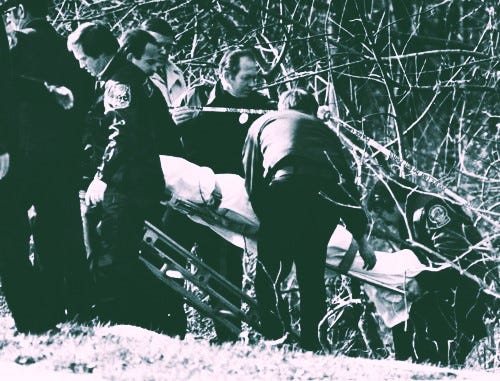
By May 1981, the city was at a breaking point. The FBI had developed a profile: the killer was likely a young, intelligent Black male who could move through these neighborhoods without drawing a second glance. They also suspected he was dumping bodies in water to wash away forensic evidence.
Acting on that hunch, stakeout teams began watching the bridges over the Chattahoochee River. In the dead of night on May 22, at exactly 2:52 a.m., an officer heard a “loud splash” beneath the James Jackson Parkway bridge. Moments later, a white 1970 Chevrolet station wagon began driving slowly away.
Police stopped the driver: a 23-year-old freelance talent scout named Wayne Williams. He told them he was looking for a singer named Cheryl Johnson for an audition—a woman police later found didn’t exist. There was no body in the car and no visible crime, so they let him go. But the clock was ticking. Two days later, the nude body of 27-year-old Nathaniel Cater washed up downstream. By June, the man from the station wagon was in custody.

The trial of Wayne Williams was a landmark in criminal history, but not for the reasons you’d think. There were no eyewitnesses. There was no confession. And in 1982, DNA testing didn’t exist. Instead, prosecutors built a case out of thin air—literally.
They constructed a “Fiber Web.” Forensic experts matched 19 different sources of fibers and hairs from the victims to Williams’ world. The most damning evidence was a rare, yellowish-green trilobal nylon fiber found on the victims that was an exact match for the carpet in Williams’ bedroom.
To make it stick, they brought in the math. Prosecutors used manufacturing data to argue that the chance of randomly finding a housing unit in Atlanta with that specific carpet was just 1 in 7,792. When they added in dog hairs consistent with Williams’ German Shepherd, Sheba, the circumstantial evidence became a mountain. After 11 hours of deliberation, Williams was found guilty of two murders—not of the children, but of two grown men: 21-year-old Jimmy Ray Payne and 27-year-old Nathaniel Cater.

In the aftermath, the press feasted on the story of the “Atlanta Child Killer.” But the media’s version of events often favored a “moral panic” over the complicated truth.
First, the name itself was a misnomer. While many victims were children, the spree included adults up to 28 years old. Second, the media often reported that Williams was caught “red-handed” at the bridge, when in reality, no one ever saw him throw a body. Perhaps most controversially, the press leaned heavily into rumors of a KKK plot. While investigators did look into white supremacists, the FBI’s profile—predicting a Black killer—held firm. There remains a lingering suspicion that the city’s elite were eager to pin everything on one Black man to avoid a racial uprising and protect Atlanta’s business-friendly reputation.
As soon as the verdict was read, the Atlanta Police Department did something that still sparks outrage: they administratively closed over 20 other murder cases, pinning them on Williams without ever bringing them to trial.
This “hasty” ending left many of the mothers, including Camille Bell, deeply dissatisfied. They felt the city had just found a convenient scapegoat to shut the book on a PR nightmare. Even some law enforcement veterans, like former DeKalb County Police Chief Louis Graham, openly doubted that one man was responsible for every single death.
Wayne Williams has now spent more than forty years in prison, still insisting he is innocent.
The story didn’t end with Wayne Williams’ conviction in 1982. For nearly forty years, a cloud of “what if” hung over the city. While the state was satisfied they had their man, the streets of Atlanta never quite felt like the math added up.
In March 2019, that lingering doubt finally forced the hand of the city’s leadership. Atlanta Mayor Keisha Lance Bottoms, along with Police Chief Erika Shields, made a stunning announcement: they were reopening the investigation into the remaining “closed” cases.
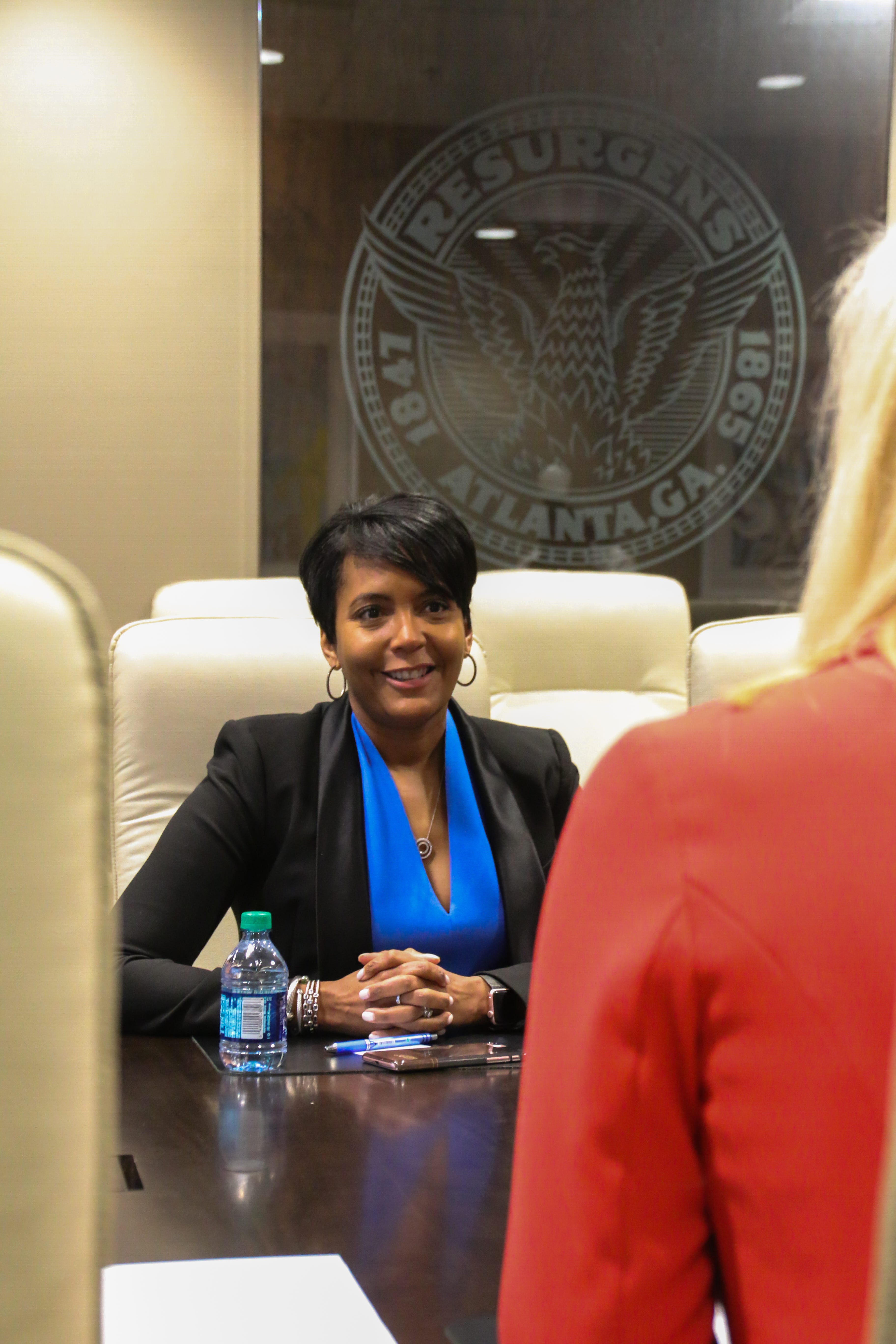
The decision wasn’t an admission that Williams was innocent, but rather an acknowledgment that the “administrative closure” of 24 murders without individual trials was a stain on the city’s history. Mayor Bottoms, who grew up in Atlanta during the terror of the early ‘80s, spoke with the weight of someone who remembered the fear firsthand.
“It’s about making sure that we have done everything humanly possible to ensure that there’s peace for these families,” she told the press. The goal was to use modern DNA technology—tech that investigators in 1981 couldn’t have even imagined—to see if the evidence in the evidence lockers still had secrets to tell.
The challenge for the 2019 team was immense. We aren’t just talking about old evidence; we’re talking about evidence that has survived four decades of storage, humidity, and the limitations of 1980s collection methods.
Many of the physical items—clothing, hair, and fibers—had degraded over time.
Over forty years, files get moved, boxes get lost, and the “chain of custody” (the legal paper trail of who handled what) becomes questionable.
While mitochondrial DNA testing in the early 2000s had already suggested a link to Williams, the 2019 push was looking for “Nuclear DNA”—the gold standard that can provide a definitive, one-in-a-billion match.
By 2021 and into 2022, the results began to trickle in, but they weren’t the “smoking gun” many hoped for.
Atlanta sent several samples to a specialized private lab in Salt Lake City that deals specifically with ancient or severely degraded DNA.
In some cases, the lab was able to pull enough data to further link Williams to specific victims. However, in other cases, the DNA was simply too far gone to provide a clear answer.
Perhaps the most frustrating part of the 2019 reopening is that while it bolstered the case against Williams for some of the murders, it didn’t necessarily close the door on the theory that he might not have acted alone—or that some of the 29 victims were killed by someone else entirely.
To this day, the investigation remains technically open. Wayne Williams, now an old man in the Hancock State Prison, still maintains that he was a scapegoat for a city that needed a villain.
For the families, the 2019 reopening wasn’t necessarily about seeing Williams stay in prison—he was already serving two life terms. It was about the dignity of a proper answer. For mothers like Catherine Leach, who lost her son Curtis in 1981, the science of 2019 was a final, desperate hope for a period at the end of a sentence that has remained a question mark for forty years.
As we stand in 2026, the “Atlanta Child Murders” remains a case where the legal resolution and the human resolution don’t quite align. The city has moved on, but 29 victims still do not have Justice.